
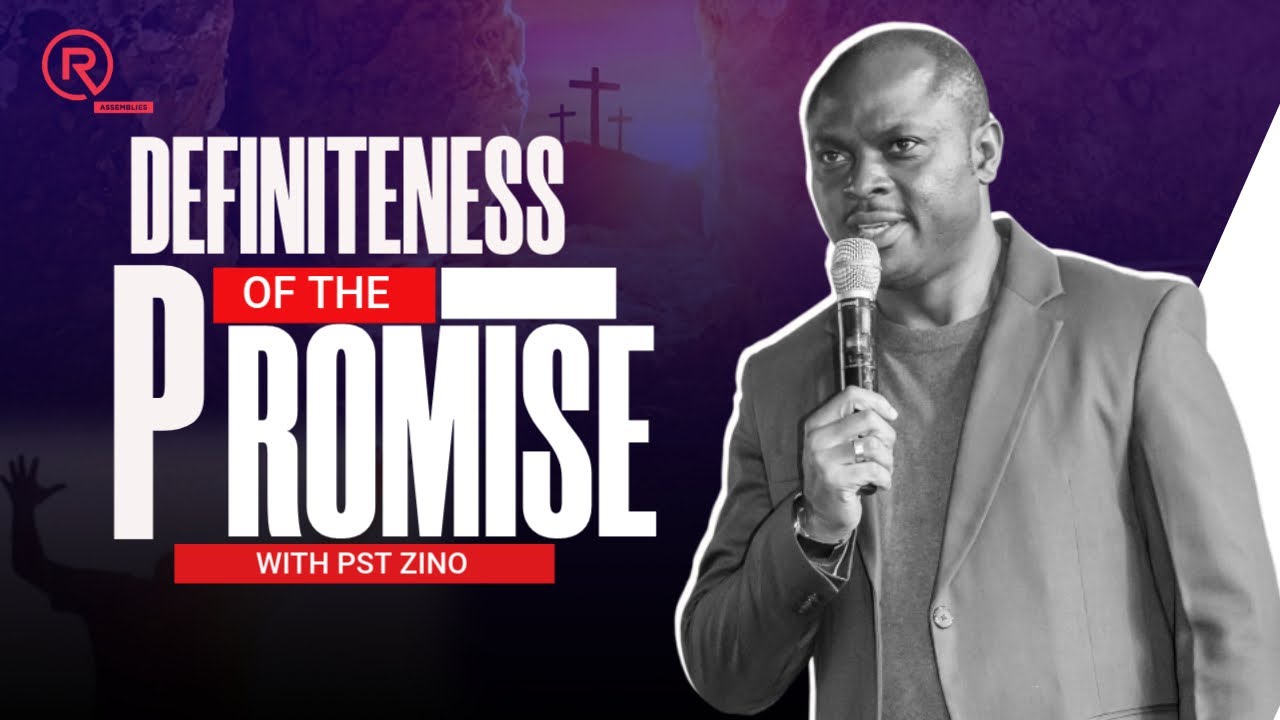
Definiteness of the Promise
Sermon Notes
The Bible Is Not Just a Rulebook—It’s a Promise You Can Count On
I’ve seen it in Scripture over and over: the definiteness of God’s promise. Not just a vague hope, not a maybe-someday, but a clear, unshakable yes from heaven. But here’s the thing—how you see the Bible determines whether you’ll actually receive that promise or just admire it from a distance.
Some of us treat the Bible like a rulebook. Thou shalt not. Do this. Don’t do that. And yes, there are commands—God’s boundaries are real, and they’re good. But if that’s all you see, you’ll end up either legalistic (obsessed with checking boxes) or exhausted (trying to earn what God already wants to give). The Bible isn’t just a list of dos and don’ts. It’s so much more.
Others see it as a guidebook—a flashlight for dark paths. And that’s true. Psalm 119:105 says God’s Word is a lamp to our feet and a light to our path. When you’re lost, confused, or facing a decision, Scripture shows you the way. Proverbs 3:5-6 tells us to trust God, and He’ll direct our steps. But even that’s not the whole story.
The Bible is also our reference point—the standard for how we live, what we believe, and what we reject. And this is where things get messy.
When Revelation Outruns the Word
I’ve watched too many believers—especially in Africa, where prayer and visions run deep—get carried away by experiences that sound spiritual but don’t line up with Scripture. A pastor fasts for 40 days, sees a vision of a man in white, and suddenly he’s being told to light seven colored candles and pray secret prayers. Another group stops wearing shoes because of a revelation. Another insists tongues must sound a certain way or you’re not "spiritual enough."
Here’s the problem: The Bible is our filter. If an experience, a vision, or a practice doesn’t align with Scripture, it doesn’t matter how real it feels. Satan can disguise himself as an angel of light (2 Corinthians 11:14). That’s why we don’t build our faith on what we see or feel—we build it on what God has said.
"If the Bible is quiet about something, be quiet about it. If the Bible is loud about something, be loud about it."
I’ve had people tell me, "Pastor, I saw Abraham in a dream!" Or, "Moses appeared to me!" And I’ll say, "That’s amazing. But here’s the thing—nowhere in the New Testament does a believer see a dead saint. Not once." The only time someone saw a dead prophet in Scripture? King Saul, who had already rejected God and went to a witch to summon Samuel (1 Samuel 28). That’s not the kind of company we want to keep.
Does that mean God can’t speak through dreams or visions? Of course not. But if it contradicts His Word, it’s not from Him. And if we start measuring spirituality by who’s seen the most dead prophets or who prays the loudest, we’ve missed the point entirely.
The Real Standard: What Does the Bible Actually Say?
John the Baptist was the greatest man born of women (Matthew 11:11), and yet there’s no record of him healing a single person. No miracles. No dead-raising. Just a voice crying in the wilderness, "Prepare the way of the Lord." If we judged spirituality by signs and wonders alone, we’d have to call John less than. But Jesus said no one was greater.
That should free us.
You don’t have to perform to be spiritual. You don’t have to see angels, fast for 40 days, or speak in a certain tone to prove your faith. The standard isn’t your experience—it’s God’s Word. And His Word is full of promises—definite, unchanging, yes and amen (2 Corinthians 1:20).
What This Means for You Today
So how do we live this out? Here’s what I want you to do this week:
-
Check your filter. When something "spiritual" happens—a dream, a feeling, a prophetic word—ask: Does this line up with Scripture? If it doesn’t, let it go. If it does, hold onto it tight.
-
Stop comparing your spiritual life to others. You don’t need to see Abraham to be close to God. You don’t need to pray for three hours a day to be "serious" about faith. God’s promises are for you—not just for the people who seem more spiritual.
-
Let the Bible define your standards, not culture. Too many of us are trying to live by rules that aren’t even in Scripture—how to dress, how to pray, what to avoid. If it’s not in the Bible, don’t make it a test of faith. And if it is in the Bible, don’t water it down.
The Promise Is Yours
Here’s the truth: God’s promises are definite. They’re not vague. They’re not "maybe if you’re good enough." They’re "I am with you always" (Matthew 28:20). "I will never leave you nor forsake you" (Hebrews 13:5). "He who began a good work in you will carry it on to completion" (Philippians 1:6).
You don’t have to earn them. You don’t have to perform for them. You just have to believe them—and let them shape how you live.
Questions to Sit With
- Where have I let experience (dreams, visions, feelings) override what Scripture actually says?
- What "rules" have I added to my faith that aren’t in the Bible?
- How can I start living like God’s promises are already true for me—not just someday, but today?
More in Grace to Recover

More from Pst Zino

Every Sunday · 3 Services
Experience it in person.
Watching online is great — but there's something special about being in the room.